

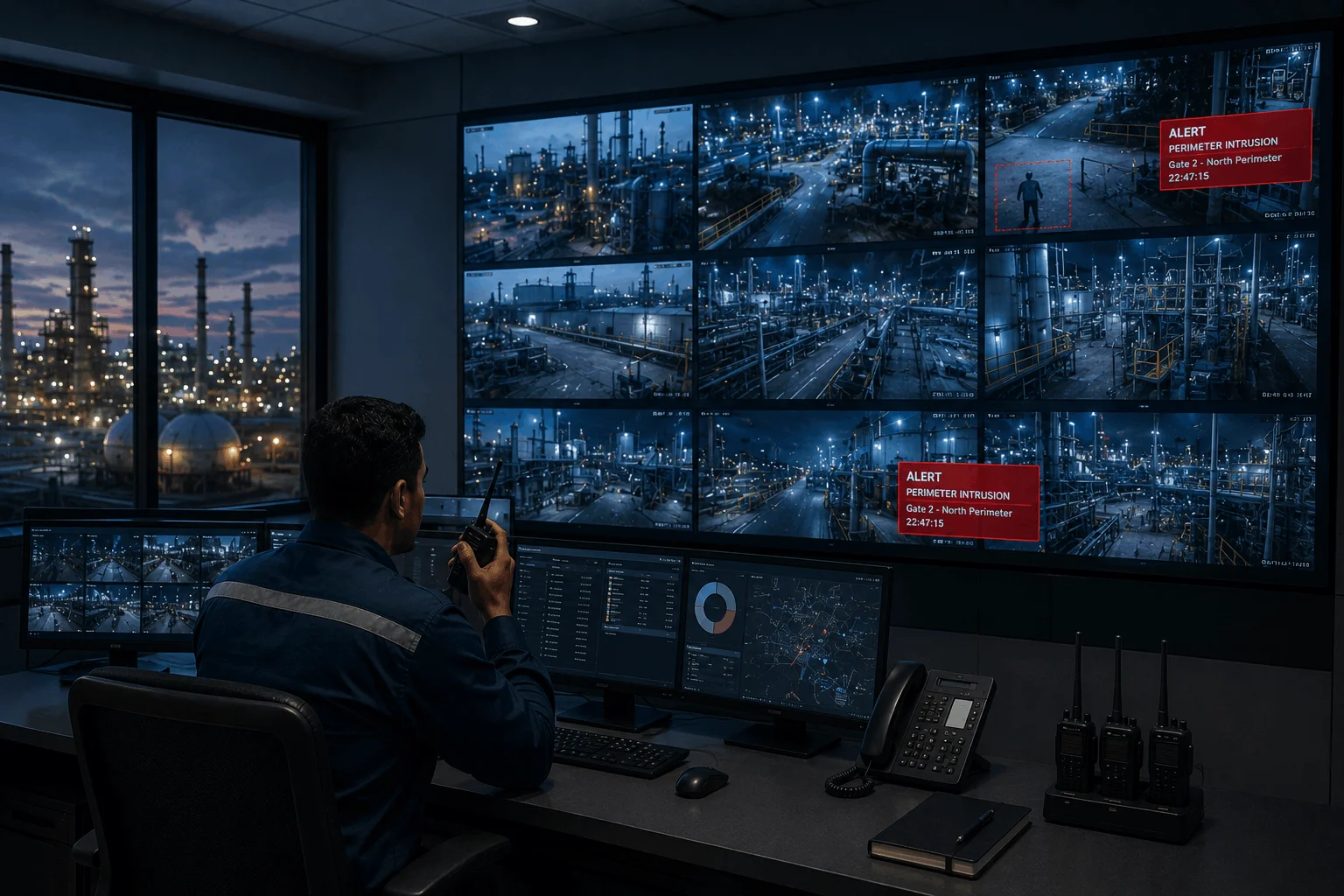

Industrial video surveillance has evolved far beyond traditional CCTV recording. Modern surveillance systems combine intelligent video analytics, automated alerts and centralised monitoring to help organisations identify potential threats and respond more effectively.
For large industrial organisations, this transformation is essential. A single facility may have hundreds of cameras monitoring entrances, perimeters, production areas, storage zones and critical assets. Recording footage alone is no longer enough. Organisations need systems that turn visual information into actionable intelligence.
From Traditional CCTV to Intelligent Video Surveillance
Traditional CCTV systems primarily serve as recording and evidence-gathering tools. Security teams review footage after an incident to understand what happened.
Modern industrial video surveillance takes a more proactive approach.
With intelligent video analytics, systems can identify predefined events and notify operators when something requires attention. These capabilities can include perimeter intrusion detection, unauthorised movement in restricted areas, abandoned object detection and unusual vehicle activity.
By reducing the need for continuous manual monitoring, intelligent surveillance helps security teams prioritise important events and improve response efficiency.
The objective is simple: transform video surveillance from passive recording into proactive security intelligence.
Engineering Surveillance for Large Industrial Sites
Industrial environments present complex surveillance requirements. Power plants, refineries, cement facilities, mines and warehouses often cover extensive areas with different operational and security risks.
Building a reliable surveillance infrastructure requires more than installing cameras. Every deployment needs careful consideration of:
- Camera positioning, coverage and blind spots
- Network architecture and fibre connectivity
- Storage capacity and video management systems
- Environmental protection for outdoor equipment
- Control room design and monitoring workflows
- Integration with existing security infrastructure
Depending on site requirements, fixed cameras, PTZ cameras, thermal imaging and specialised analytics can work together to provide comprehensive coverage.
The right combination depends on the site’s geography, operating conditions and security objectives.
Centralised Monitoring Across Multiple Locations
Organisations operating across multiple facilities need consistent visibility into their security operations.
Centralised video monitoring brings surveillance feeds and event information from different locations into a coordinated monitoring environment. Security teams can monitor multiple facilities, review alerts and manage incidents through a unified interface.
For organisations managing dozens or hundreds of sites, this approach can improve operational visibility, support standardised security procedures and simplify incident coordination.
It also provides a foundation for expanding surveillance infrastructure as operational requirements grow.
Intelligent Alerts and Faster Security Response
An effective video surveillance system should do more than generate alerts. It should deliver meaningful information to the right people at the right time.
Poorly configured alerts can overwhelm operators, while unclear interfaces can delay decision-making. Intelligent surveillance architecture must therefore balance analytics capabilities with practical monitoring requirements.
This involves defining event conditions, configuring alert priorities, establishing escalation procedures and ensuring operators can quickly access relevant footage.
When technology is designed around actual operational workflows, surveillance becomes a valuable tool for everyday security management.
The Future of Industrial Video Surveillance
The evolution from traditional CCTV to intelligent video surveillance reflects a broader shift in industrial security. Organisations increasingly require integrated systems that combine video monitoring, analytics, communication networks and centralised management.
SCORE’s experience in industrial video surveillance reflects this changing approach, from conventional CCTV deployments to intelligent, event-driven security systems designed for complex operational environments.
The focus is not simply on installing more cameras. It is on building reliable surveillance infrastructure that helps organisations identify risks, improve situational awareness and respond effectively.
Because the real value of surveillance is not how much footage you record. It is how effectively you turn what you see into action.
Scalability and Long-Term System Reliability
As industrial operations expand, surveillance infrastructure must be capable of adapting to new requirements. Additional cameras, monitoring locations, analytics capabilities and network connections may need to be introduced without disrupting existing operations.
A scalable industrial video surveillance system should support future expansion while maintaining consistent performance, secure data management and reliable connectivity. Regular maintenance, system health monitoring and periodic configuration reviews also help ensure that surveillance infrastructure continues to meet operational and security requirements.
Planning for long-term reliability from the beginning helps organisations protect their investments and maintain effective security coverage as their facilities evolve.